
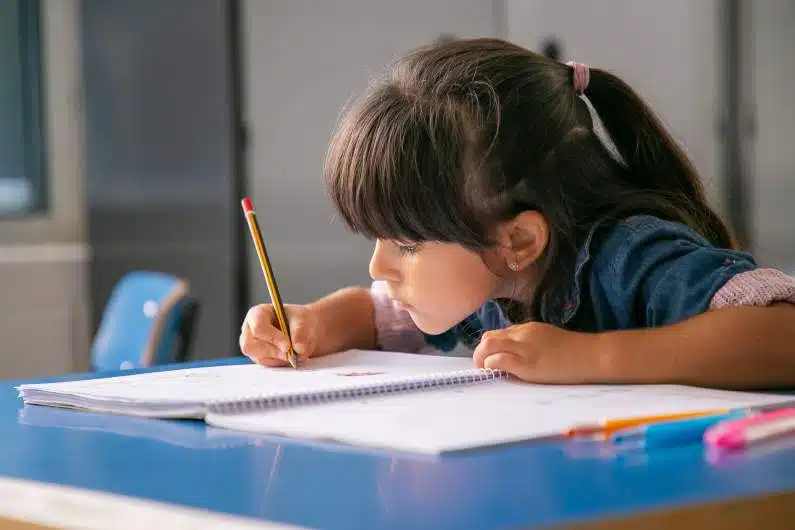
Teaching your child a new language isn’t always easy—but raising them bilingual offers lifelong cognitive, social, and professional advantages. The earlier they start, the greater the benefits.
It’s well-established that young children absorb languages like sponges. Their brains are uniquely wired for language acquisition during early development, making childhood the ideal window for bilingual learning.
Research consistently shows that bilingualism enhances critical thinking, problem-solving, mental flexibility, listening skills, concentration, creativity, and memory. These cognitive gains extend far beyond language—they shape how children learn across all subjects.
For English-speaking families, Spanish is widely regarded as one of the most accessible and practical second languages to learn, thanks to its phonetic consistency and global prevalence.
To accelerate progress in learning Spanish, working with a qualified Spanish tutor can provide personalized guidance and cultural context.
Whether your child is a beginner or already conversational, finding a native-speaking Spanish tutor who tailors lessons to their age and proficiency level can dramatically improve fluency and confidence.
Other excellent choices include French and German—languages that open doors to top universities, international careers, and rich literary and cultural traditions.
Key Benefits of Learning a Second Language in Early Childhood
Bilingual children often develop faster in areas like empathy, cultural awareness, and social adaptability. Exposure to multiple languages fosters openness and tolerance from a young age.
Long-term, bilingualism is linked to delayed onset of age-related cognitive decline—including conditions like dementia and Alzheimer’s. Plus, bilingual individuals enjoy broader career opportunities in global fields like diplomacy, tech, healthcare, and international business.
Thanks to digital immersion and improved teaching methods, learning a new language today is more accessible than ever—especially for children surrounded by apps, videos, music, and interactive content in their target language.
Modern language instruction focuses on play, storytelling, and real-life communication—making learning engaging rather than intimidating.
Natural Language Acquisition in Young Learners
Children learn languages more effortlessly than adults due to key factors: lower fear of making mistakes, greater neuroplasticity, more unstructured time for practice and play-based learning, and an innate drive to mimic sounds and patterns.
Their developing brains form neural pathways for multiple languages simultaneously—without the interference or accent barriers adults often face.
That’s why providing high-quality resources is essential. And it’s not just about language: supporting holistic development matters. For subjects like math, pairing language learning with academic support ensures well-rounded growth.
Programs like Mathnasium offer structured, confidence-building math instruction—complementing bilingual education by strengthening overall cognitive flexibility and problem-solving skills.
More Time, Less Pressure
Adults juggle work, family, and responsibilities—leaving little room for consistent language practice. Children, by contrast, have abundant time to absorb vocabulary, sounds, and grammar through daily routines, games, songs, and stories.
Consider this: mastering your first language takes years of immersion. Yet bilingual children regularly achieve near-native fluency in two languages by age 6—simply through consistent exposure and interaction.
When both languages are used naturally at home, in school, or through media, children integrate them into their identity—making bilingualism feel effortless, not forced.
Simpler Thought Processes = Faster Fluency
Young learners use shorter sentences, concrete vocabulary, and intuitive grammar—reducing cognitive load. They aren’t burdened by complex syntax or self-consciousness, which allows them to communicate freely without fear of error.
This simplicity means less frustration and more joyful experimentation—key ingredients for language mastery. As they grow, this early foundation makes advanced language learning (like academic writing or business communication) significantly easier.
Adults often struggle to translate abstract ideas between languages. Children bypass this hurdle by building both languages from the ground up—thinking and feeling in each one authentically.