
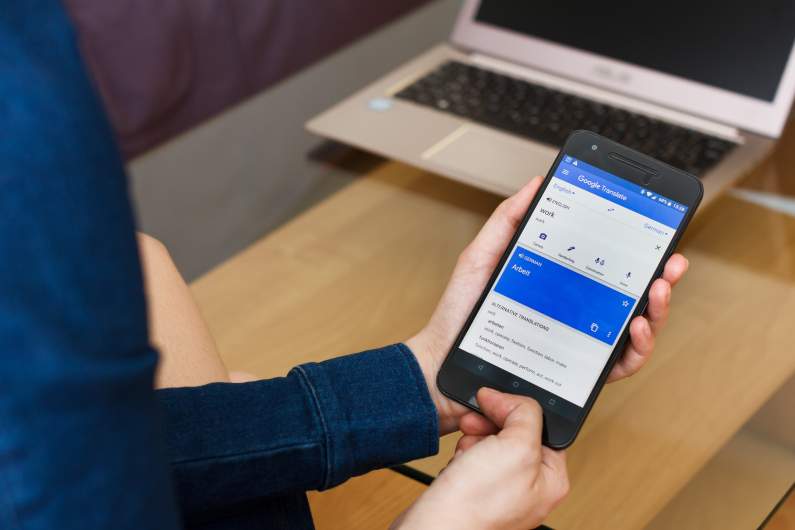
How Good Is Google Translate? The Most Accurate Language Pairs
Google Translate vs DeepL vs ChatGPT vs Gemini in 2026
Google Translate is still the most-used translation tool on the planet.
Over 500 million people open it every day to read a menu, decode an email, or get a rough sense of a foreign article.
But in 2026, Google Translate no longer competes alone.
DeepL, ChatGPT, and Google Gemini all offer machine translation that, in some language pairs, beats the old neural network workhorse hands down.
So how good is Google Translate today, which language pairs does it actually nail, and when should you reach for one of its rivals instead?
“Google Translate covers over 130 languages and serves more than 500 million users daily, making it the most accessible translation platform globally.”
Source: Google Translate Blog
How Google Translate Actually Works
Google Translate runs on a neural machine translation system the company introduced in 2016 and has updated steadily ever since.
The model breaks sentences into smaller fragments rather than treating each word in isolation, then rebuilds them in the target language using context, statistical patterns, and grammar rules learned from billions of parallel sentences.
Google’s later upgrades added zero-shot translation, which lets the model handle language pairs it was never explicitly trained on by using an internal artificial language as a bridge.
The result is fast, scalable, and free, which explains why the tool dominates casual use even as smarter rivals chip away at its quality lead.
The Most Accurate Google Translate Language Pairs
Not every language pair gets equal treatment.
Google Translate performs best when both languages have huge volumes of training data and structurally similar grammar.
The strongest pairs in 2026 are English to Spanish, English to French, English to Portuguese, English to German, and English to Italian, all of which return near-publishable quality on simple, everyday sentences.
Performance drops when you switch to morphologically rich or low-resource languages like Finnish, Hungarian, or Swahili, and quality degrades sharply on language pairs that pivot through English internally, such as Japanese to Finnish.
For our breakdown of how this affects business documents, see our piece on how to translate documents properly.
DeepL: The European Specialist
DeepL chose depth over breadth.
The German company supports just 33 languages, but its outputs in European pairs consistently outscore Google Translate in independent benchmarks, particularly for technical, legal, and business writing.
“In independent BLEU benchmarks, DeepL scores around 64.5 for English to German, compared to roughly 62.1 for ChatGPT and 48.3 for Google Translate. For European language pairs, DeepL has held the quality lead for several years.”
DeepL’s biggest weaknesses are coverage and price.
Arabic, Hindi, Swahili, and most African and South Asian languages remain unsupported, and the Pro plan starts at around 8 to 9 US dollars per month for individuals, with much higher tiers for teams and CAT-tool integration.
ChatGPT: The Context Whisperer
ChatGPT was never built as a translation tool, yet it has become one of the most flexible options on the market.
You can ask it to translate formally, casually, in keigo Japanese, in Quebec French, or in the voice of a luxury brand, and it adjusts on the fly.
Recent academic studies show that ChatGPT outperforms both Google Translate and DeepL on culturally rich content when prompted carefully.
In a 2025 peer-reviewed comparison of Chinese tourism texts, ChatGPT outperformed both Google Translate and DeepL across fidelity, fluency, cultural sensitivity, and persuasiveness, especially when culturally tailored prompts were used.
Source: Frontiers in Artificial Intelligence, Volume 8 (2025)
ChatGPT also handles Asian languages, idioms, and code-mixed technical content better than most pure machine translation engines.
The catch is that large language models occasionally embellish, paraphrase, or quietly omit parts of the source text, which makes them risky for contracts, medical records, or any document where precision is non-negotiable.
Google Gemini: The Workspace Native
Google Gemini is the newest entrant in the comparison and the one most tightly integrated with the Google Workspace stack.
Inside Gmail, Google Docs, Slides, and Sheets, Gemini handles real-time multilingual drafting, summarization, and translation across text, audio, and image inputs.
For European and East Asian language pairs the quality has caught up to ChatGPT in many tests, and the multimodal features pull ahead when you need to translate scanned documents, screenshots, or voice notes inside a single workflow.
Gemini still trails DeepL on highly technical European business writing, but the gap has narrowed steadily through 2025 and 2026.
Where Every Machine Translation Tool Still Fails
None of the four engines truly understands the text it produces.
A classic example: feed a French translator the sentence “In their house, every family member has personal things. There is his big car and her small car, his slippers and her slippers.”
French uses grammatical gender for nouns, not for owners, so all four systems still trip on the his-versus-hers distinction and produce sentences that lose the original meaning.
Legal translation, medical translation, financial reporting, sworn translations, and creative marketing copy all share the same weakness: they reward an understanding of context that no current model fully replicates.
For high-stakes content, businesses still rely on human linguists working through agencies like ours, with services for legal translation, medical translation, financial translation, and sworn translation.
Quick Comparison: Which Tool for Which Job?
| Tool | Languages | Best At | Watch Out For |
|---|---|---|---|
| Google Translate | 130+ | Speed, language coverage, casual everyday use | Loses nuance, weak on idioms, lower BLEU on European pairs |
| DeepL | 33 | European business, legal, technical writing | Limited language coverage, no Arabic or Hindi |
| ChatGPT | 100+ | Cultural nuance, idioms, prompt-controlled tone, Asian languages | Can paraphrase or omit content, requires careful review |
| Google Gemini | 40+ (growing) | Multimodal, Workspace integration, real-time translation | Smaller language range than Google Translate, newer engine |
The Bottom Line
Google Translate is excellent for what it was built to do: deliver fast, free, broadly accurate translations across more than 130 languages.
If you need a quick read on a foreign article or a menu in Athens, it remains the right tool.
For European business writing, DeepL still wins.
For nuanced creative or culturally sensitive content, ChatGPT pulls ahead when you know how to prompt it.
For multimodal tasks inside the Google ecosystem, Gemini is becoming the natural choice.
And for anything where mistakes could cost you a client, a court case, or a regulatory fine, no machine translation engine yet replaces a human linguist.
If you need a hybrid workflow that combines AI speed with human precision, reach out to BeTranslated at hello@betranslated.com or request a free quote at https://www.betranslated.com/translation-quote/.
Frequently Asked Questions
Is Google Translate Still Accurate in 2026?
Yes, for everyday use and major language pairs like English to Spanish or English to French.
Quality drops on low-resource languages, idiomatic content, and any text where tone or legal precision matters.
Which Is Better, Google Translate or DeepL?
DeepL is better for European business and technical writing, while Google Translate covers far more languages and works for free across casual use cases.
Can ChatGPT Replace Google Translate?
For some tasks, yes.
ChatGPT handles cultural nuance, idioms, and Asian languages better than Google Translate but can paraphrase or omit content, so always review its output carefully.
How Does Google Gemini Compare for Translation?
Gemini is competitive with ChatGPT in many supported language pairs and stands out for multimodal translation across text, audio, and images, especially inside Google Workspace.
Should I Use Machine Translation for Legal or Medical Documents?
No, not without human review.
For contracts, court documents, medical records, and any content with regulatory or financial consequences, work with certified linguists who specialize in your field.